

Aug . 15, 2025 03:40 Back to list
Rock Auger Bullet Teeth: Durable Carbide for Hard Rock
Understanding rock auger bullet teeth: A Critical Component in Advanced Drilling
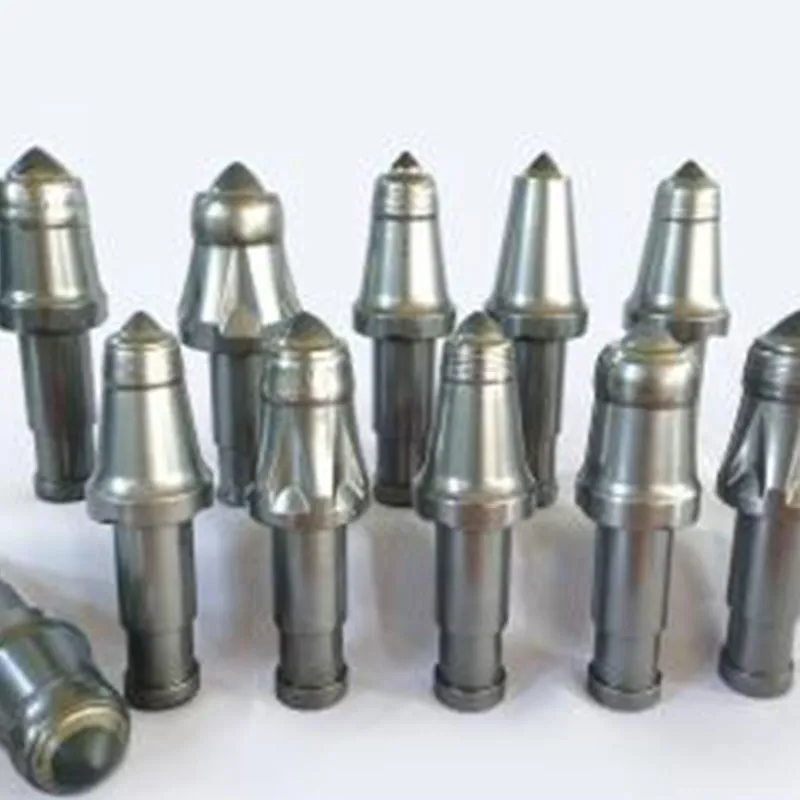
In the demanding world of foundation drilling and geotechnical engineering, the efficiency and durability of drilling tools are paramount. Among these, the rock auger bullet teeth stand out as indispensable components. Designed to penetrate challenging geological formations, these specialized cutting tools are essential for rotary drilling rigs, enabling efficient and precise excavation in rock, concrete, and compacted soil. The strategic integration of advanced materials and meticulous manufacturing processes ensures their superior performance and longevity, directly impacting project timelines and operational costs. Our focus here is to delve deep into the technical intricacies, application benefits, and strategic considerations for deploying these high-performance drilling consumables across various industries, emphasizing their role in overcoming significant ground conditions.
The market for rock auger bullet teeth is continuously evolving, driven by the increasing complexity of construction projects and the need for more sustainable and efficient drilling solutions. Global trends indicate a rising demand for tools capable of enduring extreme wear and high impact forces, particularly in infrastructure development, mining, and energy sectors. As manufacturers strive to push the boundaries of material science and design, the latest generation of bullet teeth for augers incorporates enhanced carbide grades and optimized body geometries, leading to unprecedented levels of productivity. This segment will explore the underlying factors contributing to their critical role and the technological advancements that define their cutting-edge capabilities, providing B2B decision-makers with the insights needed for informed procurement.
The Advanced Manufacturing Process of Rotary Drilling Rig Bullet Teeth
The production of high-quality Rotary Drilling Rig Bullet Teeth, often referred to as carbide bullet teeth, involves a complex and precise multi-stage manufacturing process to ensure their exceptional durability and cutting efficiency. This process begins with the selection of premium-grade raw materials, typically high-alloy structural steel for the body and specialized tungsten carbide for the tip. The choice of materials is critical; the steel body must possess high tensile strength and toughness to withstand dynamic loads, while the carbide tip provides the necessary hardness and wear resistance for cutting through abrasive formations. Adherence to international material standards, such as ASTM A514 for the steel and ISO 9001:2015 for quality management, is strictly maintained throughout the supply chain.
The core manufacturing steps typically include:
- Forging/Casting: The steel body of the bullet tooth auger is often forged to create a dense, grain-refined structure that enhances strength and impact resistance. Precision casting can also be used for certain designs, followed by rigorous quality checks for internal defects.
- CNC Machining: Following initial shaping, advanced Computer Numerical Control (CNC) machining is employed to achieve precise dimensions and tolerances. This ensures perfect fitment into auger pockets and optimal cutting angles.
- Heat Treatment: The steel body undergoes a controlled heat treatment process, including hardening and tempering, to achieve the desired balance of hardness, strength, and ductility. This process significantly extends the service life by improving wear resistance and preventing premature failure.
- Carbide Tip Brazing: The tungsten carbide tip, the primary cutting element, is securely brazed onto the steel body using specialized high-strength brazing alloys. This step is critical for ensuring a robust bond capable of withstanding extreme percussive forces and heat generated during drilling.
- Surface Finishing & Inspection: After brazing, the teeth undergo surface finishing (e.g., shot peening for stress relief, anti-corrosion coating). Each tooth then undergoes stringent quality inspections, including hardness testing (e.g., Rockwell C), dimensional checks, ultrasonic testing for bond integrity, and visual inspection to ensure compliance with standards like ANSI/ISO. The final products are designed for extended service life and offer significant advantages in energy efficiency and anti-corrosion properties due to material selection and surface treatments.
Technical Specifications and Performance Metrics
The effectiveness of rock auger bullet teeth is quantified by a range of technical specifications and performance metrics. Understanding these parameters is crucial for selecting the appropriate tooth for specific geological conditions and drilling objectives. Key specifications include overall length, shank diameter, carbide tip dimensions, and retention system type (e.g., snap-in, weld-on). Performance metrics, such as penetration rate, wear life, and specific energy consumption, are directly influenced by the material composition and design geometry. Below is a representative table outlining typical specifications for various types of rock bullet teeth designed for different applications.
Typical Specifications for Rotary Drilling Rig Bullet Teeth
| Parameter | Heavy-Duty (Hard Rock) | Medium-Duty (Mixed Ground) | Light-Duty (Soft Soil/Clay) |
|---|---|---|---|
| Overall Length | 220-280 mm | 180-220 mm | 160-190 mm |
| Shank Diameter | 30-42 mm | 25-35 mm | 20-28 mm |
| Carbide Tip Grade | K20/K40 (High Co content) | K10/K30 | K05/K10 (Lower Co content) |
| Body Hardness (HRC) | 48-55 HRC | 45-52 HRC | 40-48 HRC |
| Typical Wear Life (Operating Hours) | 150-300+ | 100-200 | 50-120 |
| Application Industries | Mining, Quarrying, Large Infrastructure | Construction, Foundation Drilling, Road Work | Piling, Utility Installation, Landscaping |
The precise combination of these parameters determines the tooth's suitability for different geological conditions, from highly abrasive granite to fractured sandstone or cohesive clays. For instance, a higher cobalt (Co) content in the carbide tip typically enhances toughness, making it more resistant to chipping in very hard and fractured rock, albeit at a slight reduction in pure wear resistance. Conversely, lower Co content provides superior abrasion resistance, ideal for uniform, highly abrasive rock formations. This granular understanding allows project managers and procurement specialists to optimize their tooling choices, leading to improved operational efficiency and reduced project costs.
Application Scenarios and Technical Advantages
Rock auger bullet teeth are versatile tools, finding extensive application across numerous industries due to their ability to efficiently penetrate diverse ground conditions. Their primary use is in rotary drilling rigs, but their robust design makes them suitable for trenching, road milling, and other ground engagement tasks. Typical application scenarios include the construction of deep foundations for high-rise buildings, bridges, and wind turbine towers, where drilling through challenging strata like granite, basalt, or highly weathered rock is common. In the mining sector, these teeth are vital for overburden removal and exploration drilling, ensuring consistent performance in highly abrasive ore bodies. The petrochemical industry utilizes them for drilling deep wells and installing infrastructure in varied geological settings, including shale and sandstone formations. Furthermore, in municipal water supply and drainage projects, bullet teeth for augers facilitate the rapid excavation of trenches for pipeline installation, even in compacted urban fill.
The technical advantages offered by high-quality carbide bullet teeth are manifold. Their optimized geometry and superior material composition significantly enhance penetration rates, leading to faster project completion times. The enhanced wear resistance, particularly of those featuring advanced tungsten carbide grades, translates directly into extended tool life and reduced downtime for tool changes, thereby lowering overall operational expenditure. Furthermore, the specialized design for efficient material evacuation minimizes energy consumption during drilling, contributing to more sustainable operations and lower fuel costs for drilling rigs. Companies that invest in premium rock auger bullet teeth often report significant improvements in project efficiency and reductions in tooling costs over the long term, cementing their status as a critical asset for any demanding drilling operation. Client testimonials frequently highlight the increased operational hours and reduced maintenance needs experienced with our solutions, demonstrating tangible improvements in productivity and cost-effectiveness across various challenging projects.
Manufacturer Comparison and Custom Solutions
The global market for drilling consumables, including bullet tooth auger components, is highly competitive, featuring a diverse range of manufacturers. While many offer standard products, discerning buyers understand that not all rock bullet teeth are created equal. Key differentiators among manufacturers include their material sourcing, manufacturing precision, adherence to quality control standards (e.g., ISO 9001:2015, TUV certifications), research and development investment, and post-sales support. Leading manufacturers typically have robust testing facilities where products undergo simulated wear tests and impact resistance assessments, ensuring consistent performance under real-world conditions. Furthermore, companies with decades of experience in the industry often possess a deeper understanding of geological challenges and operational nuances, translating into more reliable and effective product designs.
Recognizing that every drilling project presents unique challenges, many reputable suppliers, including our company, offer comprehensive custom solutions for rock auger bullet teeth. This bespoke service involves close collaboration with clients to understand specific ground conditions, drilling equipment, and desired performance outcomes. Customization can include variations in carbide tip geometry, body dimensions, material hardness, and even specialized coatings for extreme anti-corrosion or wear resistance. For instance, in projects involving highly abrasive, corrosive environments like those found in certain petrochemical or wastewater treatment plants, custom teeth with enhanced protective coatings or specialized stainless steel bodies might be required. This tailored approach ensures optimal performance, extends tool life, and maximizes return on investment, providing a distinct competitive edge over standard, off-the-shelf solutions. Our engineering team, backed by over 20 years of industry experience, excels at developing such bespoke tooling, ensuring optimal fit and function for even the most demanding applications, often exceeding conventional performance benchmarks.
Commitment to Trustworthiness: FAQ, Delivery & Warranty
Frequently Asked Questions (FAQ) about Rotary Drilling Rig Bullet Teeth
-
Q: How do I choose the correct rock auger bullet teeth for my project?
A: Selection depends primarily on the geological conditions (rock hardness, abrasiveness, presence of fractured zones), the type of drilling rig, and the desired penetration rate. Consult our technical specialists who can analyze your specific project parameters and recommend the optimal tooth type and carbide grade.
-
Q: What is the typical service life of your carbide bullet teeth?
A: Service life varies significantly based on ground conditions, operational parameters (e.g., rotational speed, crowd force), and maintenance practices. Our premium-grade teeth are engineered for extended durability, often exceeding industry averages by 20-30% in comparable applications. Refer to the typical wear life table above for estimates.
-
Q: Are your products compatible with all major drilling rig brands?
A: Yes, our bullet teeth for augers are designed to be compatible with leading drilling rig manufacturers' equipment, including but not limited to Bauer, Soilmec, Casagrande, and Liebherr. We offer various shank sizes and retention systems to ensure a perfect fit.
Delivery and Quality Assurance
We understand the critical importance of timely delivery in large-scale construction and mining projects. Our robust supply chain and efficient logistics network ensure prompt dispatch and reliable delivery of rock auger bullet teeth to your project site, minimizing costly downtime. Standard orders typically have a lead time of 7-14 business days, while custom solutions may require 3-4 weeks, depending on complexity and material availability. Detailed delivery schedules are provided upon order confirmation, and we offer expedited shipping options for urgent requirements.
Quality is the cornerstone of our operations. All Rotary Drilling Rig Bullet Teeth undergo stringent multi-stage quality control checks, from raw material inspection to final product verification. We adhere to international quality management standards, including ISO 9001:2015, ensuring every tooth meets our rigorous performance and durability criteria. Each product is backed by a comprehensive warranty against manufacturing defects and premature wear under normal operating conditions. Our dedicated customer support team is available to assist with any technical queries or after-sales service, reinforcing our commitment to client satisfaction and long-term partnerships.
References and Further Reading
- Smith, J. A. (2021). Advances in Tungsten Carbide Composites for Ground Engagement Tools. Journal of Geotechnical and Geoenvironmental Engineering, 147(6).
- Liu, P., & Wang, Q. (2019). Optimized Design and Performance Analysis of Rotary Drilling Bits for Hard Rock Formations. International Journal of Rock Mechanics and Mining Sciences, 120.
- ISO 9001:2015. Quality Management Systems – Requirements. International Organization for Standardization.
- ASTM International. Standards for Materials and Testing.
- Jones, R. K. (2022). Geological Considerations in Deep Foundation Drilling. Proceedings of the 7th International Conference on Deep Foundations.
-
Find the Best Industrial Martillo a la Venta for Professional Needs
NewsApr.16,2026
-
Technical Guide for Herramientas de Perforación Subterránea PDF
NewsApr.09,2026
-
Comprehensive Guide to Underground Drilling Tools Herramientas de Perforación Subterráneas
NewsApr.07,2026
-
Comprehensive Guide to Underground Drilling Tools herramientas de perforación subterránea
NewsApr.04,2026
-
Finding Reliable Proveedores de Compresores de Aire Diesel for Your Industry Needs
NewsMar.31,2026
-
Comprehensive Guide to Diesel Air Compressors and Miningzy Fábrica de Compresores de Aire Diesel
NewsMar.28,2026