

Oct . 23, 2025 16:20 Back to list
Crusher Hammer Head - Wear-Resistant, Long Life, OEM Fit
Steel Heavy Hammer Crusher Hammer: what’s really changing on the comminution front
In quarries and cement lines, downtime is the tax nobody wants to pay. That’s why the humble Crusher Hammer Head has become the quiet battleground for cost per ton. The latest alloy-composite designs—honestly, a few years ago they felt exotic—are now showing up in the roughest limestone and slag circuits and holding up better than expected.
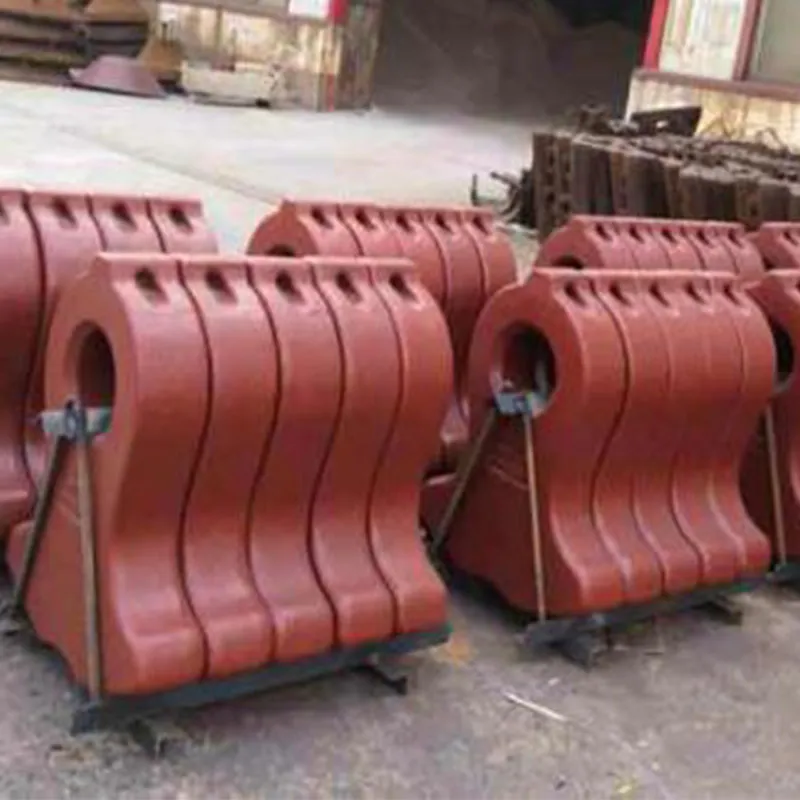
What’s inside this hammer (and why it matters)
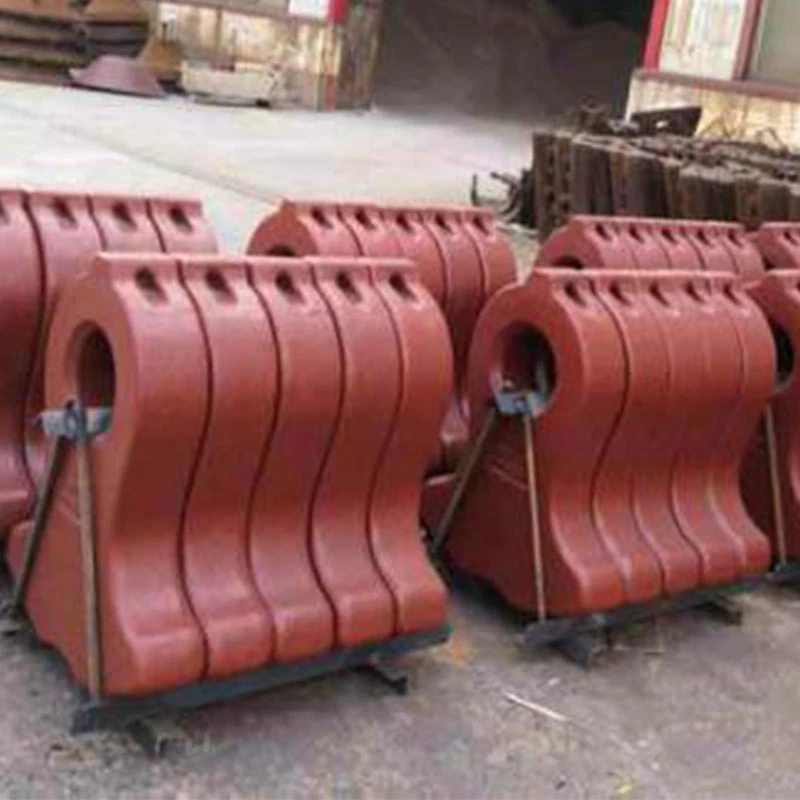
The Steel Heavy Hammer Crusher Hammer uses a tungsten–titanium–vanadium microalloyed steel body with cemented carbide round rods inlaid on the striking face and alloy blocks cast in place. That inlay sounds simple; in practice, getting the metallurgy and bonding right is the whole trick. The result, many customers say, is a Crusher Hammer Head that pushes hardness where it counts while keeping a tough core—so it doesn’t chip out when the feed gets nasty or oversized.
Process flow, briefly (shop-floor version)
- Materials: clean low‑S/low‑P steel charge + W, Ti, V microalloys; carbide rods (YG8/YG11 grade, ≈14.5 g/cm³).
- Methods: precision sand casting with alloy block preforms; inlay of carbide rods; controlled pouring to avoid cold shuts.
- Heat treatment: austenitize, oil quench, double temper for tough core and hard face.
- Finishing: CNC fit surfaces, bore sizing, radius blending at stress risers.
- Testing: chemistry (OES), hardness (HRC), ultrasonic (UT), balance (ISO 1940-1), and abrasion sampling (ASTM G65) for reference.
Product specifications (typical)
| Body material | Tungsten–Titanium–Vanadium alloy steel (microalloyed), carbide inlay on impact face |
| Surface hardness | HRC 56–60 (face); core HRC 30–38 for toughness |
| Abrasion (ASTM G65, Proc. A) | ≈20–28 mm³ volume loss (lab data; real‑world use may vary) |
| Impact toughness | AKU2 ≥ 15 J (typical, room temp.) |
| Sizes / weight | Custom; 15–180 kg per hammer common |
| Balance grade | Up to G6.3 (ISO 1940-1) on request |
| Service life | ≈1.2–1.6× vs. standard Mn13 in limestone; up to 2× in soft shale |
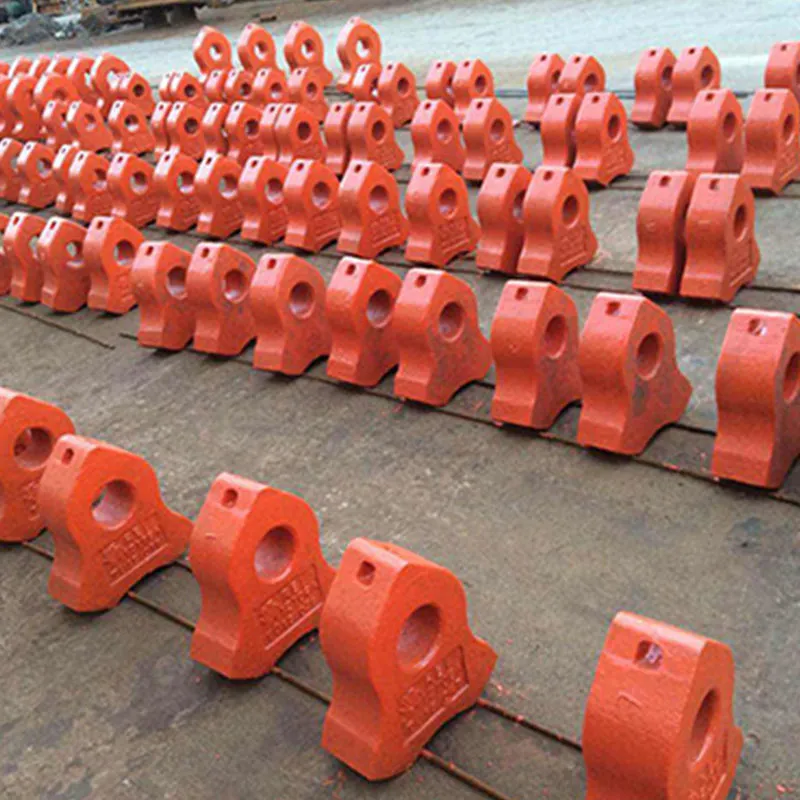
Where it’s being used
Limestone and marl prep in cement plants, aggregate lines (basalt with fines), steel‑slag recycling, coal gangue, and construction waste—basically any place the feed can be abrasive and a bit unpredictable. The Crusher Hammer Head seems to shrug off wet clay pockets better than straight white iron solutions, which is a relief during rainy seasons.
Vendor snapshot (rough guide)
| Vendor | Material approach | Face technology | Avg. life in limestone |
|---|---|---|---|
| MiningZY (this model) | W–Ti–V alloy steel | Carbide rod inlay + alloy block casting | ≈1.2–1.6× Mn13 |
| Foundry A (import) | High‑Mn (Mn13/18) | None | Baseline (1.0×) |
| Brand B (composite) | Alloy steel | Hardfaced overlay | ≈1.1–1.4× |
Customization and QC
Options include hole pattern, eye type, weight window, balance grade, and face geometry. Testing references: chemistry via OES (ASTM E415), hardness ISO 6508‑1, UT per ASTM A609, balancing ISO 1940‑1. ISO 9001:2015 QA in place; third‑party inspection (SGS/BV) available. Origin: Tower C 603, MCC World Grand Plaza, No.66, XiangTai Road, Shijiazhuang, Hebei, China.

Field notes and mini case studies
Hebei cement line (800 tph limestone): switched to this Crusher Hammer Head, changeout interval moved from 9–10 days to 14 days (≈45% longer), power draw unchanged, rotor vibration “quieter” per maintenance logs.
Indonesian aggregate plant (basalt + sand): overlay hammers were spalling; carbide‑inlay face showed steady wear, no edge breakage over two months. To be honest, that surprised the crew given the basalt fines.
Why it works (short version)
- Hard where it hits: carbide inlay resists micro‑ploughing and quartz abrasion.
- Tough where it counts: tempered core absorbs impact, reducing catastrophic chip‑outs.
- Stable rotor: balanced to spec, less wobble, fewer cracked keys and bearings.
Standards and references
-
Find the Best Industrial Martillo a la Venta for Professional Needs
NewsApr.16,2026
-
Technical Guide for Herramientas de Perforación Subterránea PDF
NewsApr.09,2026
-
Comprehensive Guide to Underground Drilling Tools Herramientas de Perforación Subterráneas
NewsApr.07,2026
-
Comprehensive Guide to Underground Drilling Tools herramientas de perforación subterránea
NewsApr.04,2026
-
Finding Reliable Proveedores de Compresores de Aire Diesel for Your Industry Needs
NewsMar.31,2026
-
Comprehensive Guide to Diesel Air Compressors and Miningzy Fábrica de Compresores de Aire Diesel
NewsMar.28,2026