Managing high-density abrasive fluids requires more than just pump power; it demands a precise alignment of material science and hydraulic design. In heavy industrial sectors, the failure of a single pump can halt entire production lines, making the selection of equipment critical to operational uptime.
The shift toward deeper mining operations and more complex chemical processing has pushed the boundaries of traditional pumping systems. Engineers are now prioritizing vertical configurations to minimize footprint and optimize the suction of thick underflows, moving away from horizontal layouts in space-constrained environments.
When evaluating vertical slurry pump manufacturers, the focus must shift from simple flow rates to long-term wear resistance and the ability to handle varying solid concentrations without clogging.


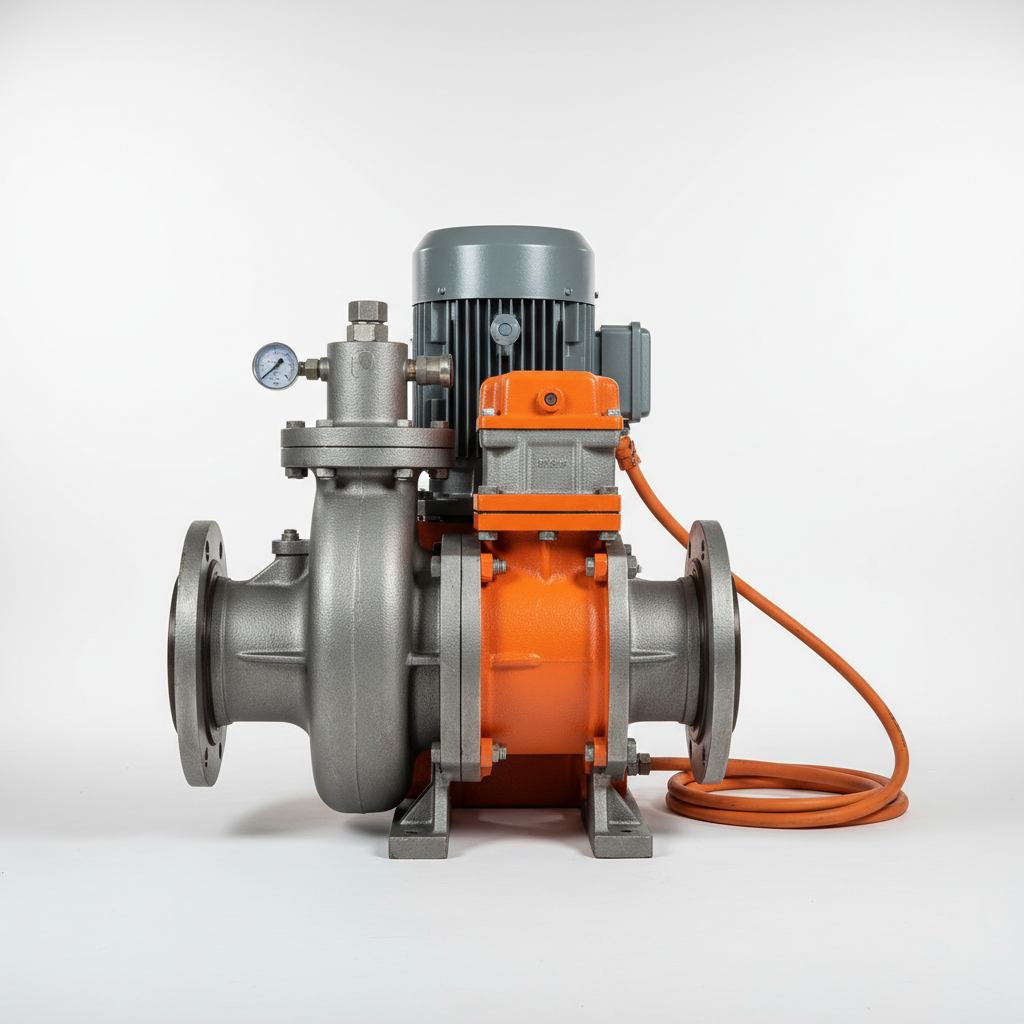
Vertical slurry pumps have gained prominence primarily due to their ability to handle fluids from sumps or tanks without requiring external priming. Unlike horizontal pumps, the vertical design allows the impeller to be submerged directly in the slurry, which significantly reduces the risk of cavitation and air entrapment.
This configuration is particularly advantageous in mining and dredging, where space is limited and the fluid is often a thick, abrasive mixture. By eliminating the need for complex piping for suction, these systems reduce installation costs and potential leak points in the system.
The primary engineering challenge in slurry pumping is managing the kinetic energy of abrasive particles. When particles strike the internal walls of a pump, they cause erosive wear. To counter this, designers focus on optimizing flow velocity—keeping it high enough to prevent particles from settling (sedimentation) but low enough to avoid excessive erosion.
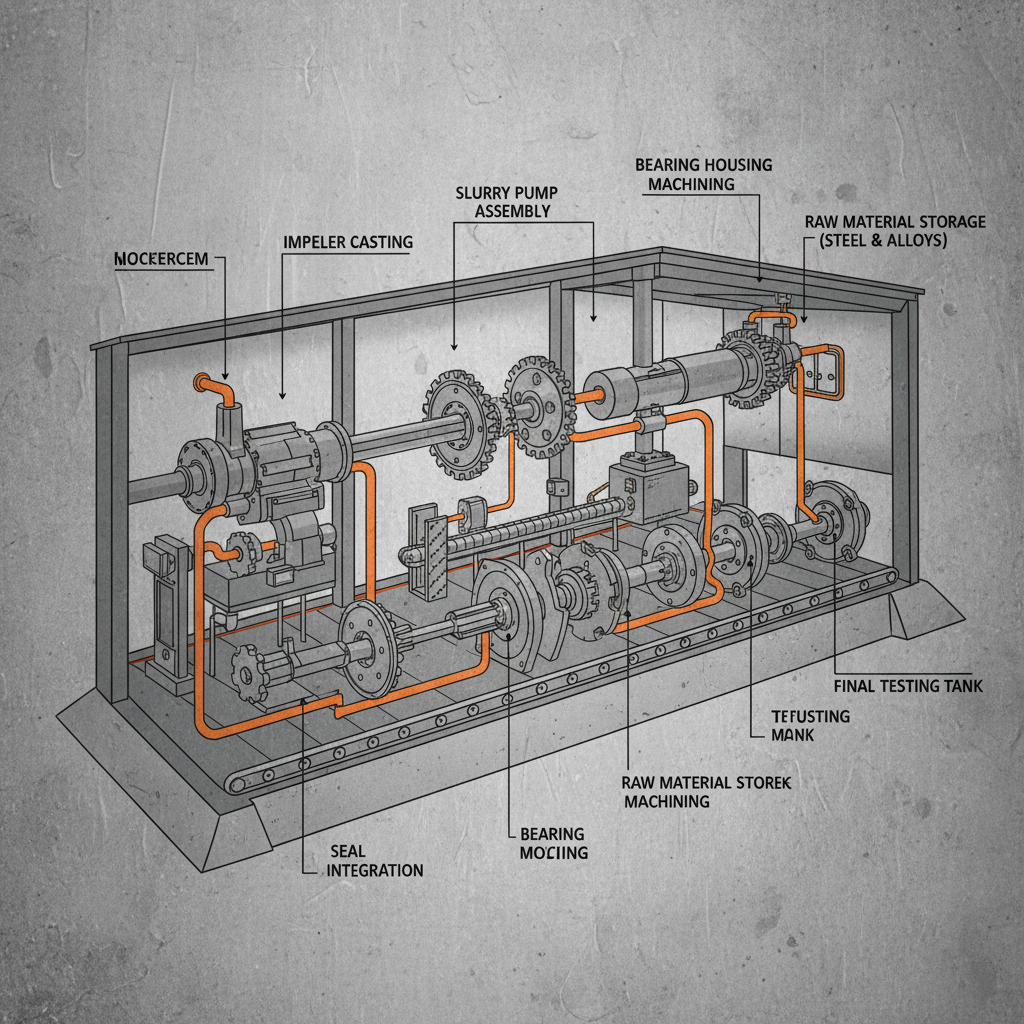
The internal geometry of the pump, particularly the impeller and volute, is designed to maintain a smooth flow path. Any turbulence or sharp change in direction creates a localized high-velocity zone where wear is accelerated. Therefore, the precision of the casting and the smoothness of the internal finish are paramount.
Furthermore, the sealing mechanism must be robust. Slurry is inherently destructive to mechanical seals. Modern systems often employ a combination of expeller seals and gland packing to ensure that abrasive solids are pushed away from the shaft, extending the mean time between failures (MTBF).
Material selection is the first line of defense against abrasion. Depending on the chemical composition of the slurry and the hardness of the particles, different alloys are utilized. High chrome white irons are standard for high-abrasion environments, while bimetallic materials are used where both corrosion and erosion are present.
Long-term pump viability is not determined by the initial hardness of the material, but by its ability to maintain structural integrity under continuous impingement and chemical attack.
Zen Young Technology Hebei Co., Ltd. leverages foundry technology to produce specialized castings, including super high chrome hyper eutectic white iron and low carbon high chrome alloys. These materials are engineered to withstand the extreme conditions found in hydrocyclone feeding and tailing pump applications.
Evaluating the performance of a slurry system requires looking beyond the pump's efficiency curve. One must consider the "system efficiency," which includes the energy required to overcome friction in the pipeline and the energy lost to heat during high-viscosity transport.
A critical metric is the wear-to-energy ratio. A pump that is highly energy-efficient but wears out every two weeks is more costly in the long run than a slightly less efficient pump with a lifespan of six months. The goal is to find the equilibrium between operational power consumption and maintenance intervals.
In a typical industrial setting, such as a thickener underflow, vertical slurry pumps are employed to transport concentrated solids to the next stage of processing. Here, the pump must deal with very high solids percentages where the fluid behaves almost like a non-Newtonian paste. The vertical design prevents the solids from settling in a horizontal suction line, which would otherwise lead to frequent blockages.
Another common scenario is the hydrocyclone feeding pump, where consistent pressure is required to ensure efficient particle separation. In these cases, the reliability of the pump parts—such as the impeller and liner—is what dictates the overall stability of the mineral separation circuit.
The industry is moving toward "predictive maintenance" for slurry pumps. By integrating vibration sensors and acoustic monitoring into the pump casing, operators can detect the onset of impeller wear or cavitation before a catastrophic failure occurs. This shift from scheduled to condition-based maintenance is significantly reducing downtime in large-scale mining operations.
Additionally, there is a growing focus on energy-efficient motor drives. Variable Frequency Drives (VFDs) allow the pump speed to be adjusted based on the actual slurry density, preventing the waste of energy that occurs when a pump is oversized for the current load.
Material innovation continues to evolve, with the exploration of nano-composite liners and additive manufacturing for complex internal geometries. These advancements aim to further reduce the friction coefficient and increase the hardness of the wear surfaces.
When selecting a partner among various vertical slurry pump manufacturers, procurement teams should look beyond the initial price. The total cost of ownership (TCO) includes the purchase price, the energy cost over five years, and the cost of replacement parts.
A manufacturer's ability to provide OEM-grade spare parts is a critical differentiator. If a pump fails and the replacement impeller takes four weeks to ship, the lost production revenue far outweighs any initial savings on the pump's purchase price.
The following framework outlines the key considerations when comparing different pump solutions based on the operational requirements of the site.
| Fluid Characteristic | Priority Factor | Recommended Material | Risk Consideration |
|---|---|---|---|
| High Abrasiveness | Hardness | High Chrome Iron | Brittle Fracture |
| Corrosive Slurry | Chemical Stability | Bimetallic/Alloy | Pitting Corrosion |
| High Solid Density | Flow Velocity | Low Carbon Chrome | Sedimentation |
| Variable Flow Rate | Hydraulic Range | Standard Alloy | Cavitation |
| Extreme Impact | Toughness | Manganese Steel | Work Hardening Rate |
| Dredging Use | Volume/Efficiency | Chrome-Iron Alloy | Seal Wear |
The primary advantage is the elimination of the need for priming and the reduction of the physical footprint. Because the impeller is submerged in the slurry source (like a sump), it prevents air entrapment and cavitation, which are common issues in horizontal suction lines. This makes them ideal for thick underflow and dredging applications.
High chrome iron is best for high-velocity abrasive wear where hardness is key. Manganese steel is preferred for applications with high impact (large rocks or debris) because it possesses "work-hardening" properties, meaning it becomes harder as it is struck. The choice depends on whether the primary wear mechanism is sliding abrasion or impact.
The most frequent failures occur at the seal and the impeller edges. Abrasive particles can penetrate the sealing system or erode the impeller vanes, leading to a drop in head and flow efficiency. Regular monitoring of vibration and flow rates can help identify these failures before they lead to complete pump seizure.
While they handle air better than horizontal pumps due to the submerged design, excessive air can still cause cavitation and erratic flow. Proper sump design and maintaining a minimum submergence level are essential to ensure the pump operates efficiently and does not suffer from premature wear.
As the density of the slurry increases, the viscosity generally increases as well. This requires more torque from the motor to move the fluid through the pump and the pipeline. Using a Variable Frequency Drive (VFD) allows operators to adjust the power input to match the density, preventing motor overload.
Poor quality castings can have internal voids or inconsistent alloy distribution, which create weak points. In a high-pressure slurry environment, these weak points become the first areas to erode or crack. OEM-grade casting ensures that the material properties are uniform across the entire component, maximizing the lifespan of the pump.
The efficiency of industrial slurry transport relies on a delicate balance of hydraulic design and metallurgical expertise. By prioritizing vertical configurations and high-grade alloys, operators can significantly reduce maintenance downtime and optimize the throughput of mineral and chemical processing plants.
Ultimately, the value of a pumping solution is measured not by its initial cost, but by its resilience in the face of continuous abrasion. Investing in precision-engineered components and a robust maintenance strategy is the only way to ensure sustainable operational success in heavy industry.


Zen Young Technology Hebei Co., Ltd. Specialized in Slurry pump solutions, Foundry OEM services, Drilling rigs and drilling tools, and Air compressors for world wide industries of mining, metallurgy, municipal construction, power, dredging, petrochemical, etc.
Copyright © 2026 Zen Young Technology Hebei Co.,Ltd. All Rights Reserved. Sitemap | Privacy Policy | Top Blog | Global Service | Hot Products | Knowledge