
Sep . 22, 2025 12:01 Back to list
Photovoltaic Open-Air Drilling Car: Solar-Powered Efficiency
Industry Trends and the Rise of Sustainable Drilling
The global mining and construction industries are undergoing a profound transformation, driven by an urgent need for enhanced operational efficiency, reduced environmental impact, and greater energy independence. Traditional open-air drilling methods, heavily reliant on fossil fuels, face increasing scrutiny due to volatile fuel costs, stringent emission regulations, and the imperative for sustainable practices. This paradigm shift has accelerated the adoption of innovative, green technologies.
In response to these challenges, advanced solutions are emerging, such as the Photovoltaic Type Open-Air Drilling Car. This groundbreaking equipment represents a significant leap forward, integrating renewable energy directly into demanding drilling operations. By leveraging photovoltaic (PV) technology, these systems reduce reliance on conventional power sources, offering a pathway to lower operational costs and a reduced carbon footprint, aligning perfectly with the industry's evolving sustainability goals and the push towards electrifying heavy machinery.
Market trends indicate a sustained growth in demand for self-sufficient, mobile drilling platforms capable of operating in remote locations without extensive logistical support for fuel. The convergence of advanced battery storage, efficient PV panels, and robust drilling mechanics is creating a new category of high-performance, eco-friendly machinery that promises to redefine productivity and environmental stewardship in surface mining, quarrying, and large-scale infrastructure projects.
Manufacturing Process Flow of the Photovoltaic Type Open-Air Drilling Car
The manufacturing of a Photovoltaic Type Open-Air Drilling Car is a meticulously engineered process, ensuring the robust performance and longevity required for demanding open-air environments. It combines traditional heavy machinery fabrication with cutting-edge renewable energy system integration.
1. Raw Material Sourcing and Preparation:
High-strength alloy steels (e.g., Q345B, Hardox® equivalent for wear parts) and aerospace-grade aluminum alloys are sourced, rigorously tested for chemical composition, mechanical properties, and flaw detection (e.g., ultrasonic testing ASTM E114). Components for the photovoltaic array utilize high-efficiency monocrystalline or polycrystalline silicon cells, encapsulated for durability.
2. Structural Fabrication:
- Chassis and Frame: Heavy-duty steel plates are cut (laser or plasma), bent, and welded using automated robotic welding systems (e.g., MIG/MAG) to ensure consistent, high-integrity joints. Critical stress points undergo forging for superior strength and fatigue resistance.
- Mast and Boom Assembly: Precision CNC machining is employed for components requiring tight tolerances, such as pivot points and hydraulic cylinder mounts. The mast structure is typically a welded box-section design, optimizing strength-to-weight ratio.
- Drill Head Components: Gears, shafts, and bearings are often forged from specific steel alloys, followed by heat treatment (carburizing, nitriding) and precision grinding to achieve the required hardness and surface finish.
3. Photovoltaic System Integration:
The PV panels are mounted on retractable or fixed structures designed to withstand harsh outdoor conditions. This includes robust framing, weather-sealed enclosures, and specialized cabling. High-capacity, deep-cycle battery banks (e.g., Lithium Iron Phosphate – LiFePO4) are integrated, managed by advanced battery management systems (BMS) for optimal charge/discharge cycles and safety.
4. Power Train and Hydraulic System Assembly:
Electric motors, frequency converters, and power distribution units are installed. The hydraulic system, comprising pumps, valves, cylinders, and hoses, is assembled, with components rigorously tested to ISO 4406 cleanliness standards to prevent contamination and ensure reliability.
5. Control System and Cab Installation:
Advanced PLC (Programmable Logic Controller) systems are programmed for automated drilling functions, safety interlocks, and energy management. The operator cab is ergonomically designed, climate-controlled, and equipped with a Human-Machine Interface (HMI) for intuitive operation.
6. Testing and Quality Assurance:
- Structural Integrity: Non-destructive testing (NDT) including magnetic particle inspection and ultrasonic testing on critical welds.
- Performance Testing: Full functional tests for drilling speed, penetration rate, tramming capability, and stability under simulated load conditions.
- PV System Performance: Solar panel efficiency validation under varying irradiance, battery charge/discharge cycle testing, and inverter efficiency verification according to IEC standards.
- Safety Compliance: Adherence to international safety standards such as ISO 12100 (Safety of machinery) and local regulations.
- Environmental Chamber Testing: Key electronic components are tested for resilience in extreme temperatures and humidity.
7. Finishing and Coating:
A multi-layer industrial coating system (e.g., epoxy primer, polyurethane topcoat) is applied for superior corrosion resistance, crucial for the anticipated service life of 15-20 years in harsh environments. This ensures durability in target industries such as petrochemical, metallurgy, and water supply & drainage, offering significant advantages like energy saving through direct solar power and enhanced corrosion resistance.
Technical Specifications and Features
The Photovoltaic Type Open-Air Drilling Car is engineered to deliver exceptional performance and reliability, integrating advanced drilling mechanics with a robust renewable energy system. The following table details typical specifications for our flagship model, designed for versatility across various geological conditions.
Product Specification Table
| Parameter | Specification |
|---|---|
| Drilling Method | Down-The-Hole (DTH) Hammer / Top Hammer Rotary |
| Hole Diameter Range | 89 mm - 178 mm (3.5 in - 7 in) |
| Max Drilling Depth | Up to 30 meters (98 ft) |
| Total Power Output | 150 kW - 250 kW (Configurable) |
| Photovoltaic Panel Capacity | 20 kWp - 50 kWp (Peak Power) |
| Battery Storage Capacity | 100 kWh - 300 kWh (LiFePO4) |
| Tramming Speed | Up to 3.5 km/h |
| Dust Collection System | Integrated Dry Type (99.5% efficiency) |
| Operating Temperature | -20°C to +45°C |
| Control System | Advanced PLC with Telematics readiness |
| Estimated Service Life | 15-20 years with proper maintenance |
These specifications underscore the advanced engineering embedded in every Photovoltaic Type Open-Air Drilling Car, ensuring both powerful drilling capabilities and sustainable energy management. The high-capacity battery system allows for continuous operation even during periods of low sunlight, providing reliable power throughout operational shifts. Intelligent energy management systems optimize power distribution between drilling, tramming, and auxiliary functions, maximizing the utilization of solar energy and minimizing reliance on external charging or backup generation.
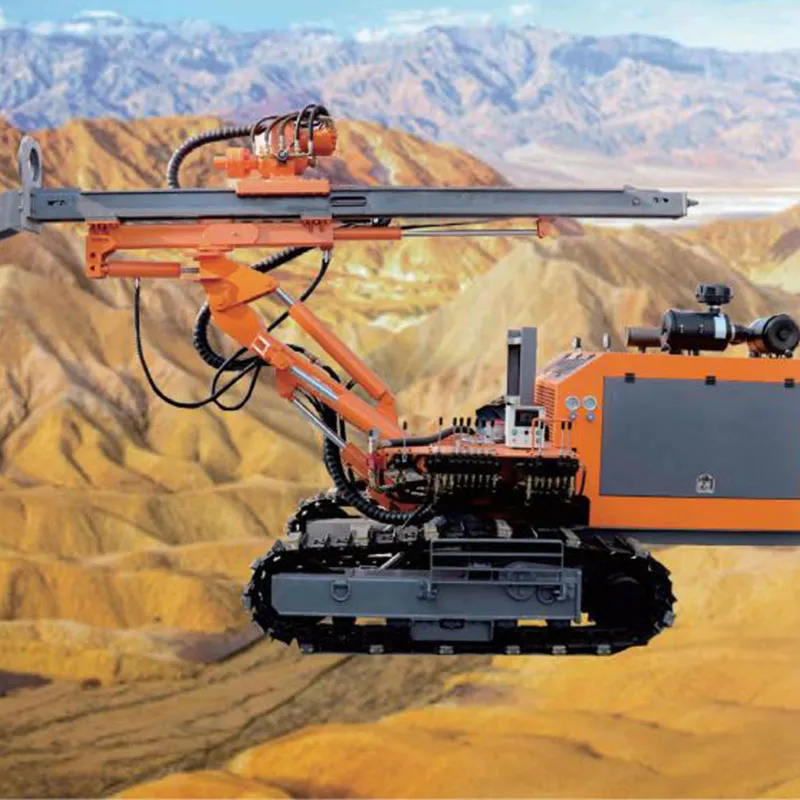
Designed for diverse geological formations, from soft sedimentary rocks to hard crystalline formations, the drilling car offers adjustable rotation speeds and feed pressures, enabling operators to achieve optimal penetration rates and drill bit life. The robust undercarriage and high ground clearance ensure excellent mobility and stability on uneven terrain, characteristic of open-pit mining and quarrying sites.
Application Scenarios and Technical Advantages
The versatility and self-sufficiency of the Photovoltaic Type Open-Air Drilling Car make it an ideal solution for a broad spectrum of demanding open-air drilling applications across various industries. Its inherent design addresses critical operational challenges while simultaneously promoting environmental stewardship.
Key Application Scenarios:
- Open-Pit Mining Operations: Ideal for overburden removal, pre-splitting, and production drilling in large-scale coal, iron ore, copper, and aggregate mines. Its autonomous power system minimizes the need for extensive power grid infrastructure in remote mine sites.
- Quarrying Industry: Essential for dimension stone quarrying (granite, marble, limestone) and aggregate production, where precision and consistent drilling performance are paramount for optimal block extraction and material sizing.
- Construction and Infrastructure Development: Utilized for rock excavation in road building, dam construction, foundation preparation for large structures, and tunnel portals. Its mobility allows for efficient repositioning across dynamic construction sites.
- Geotechnical and Exploration Drilling: Suitable for shallow to medium-depth exploration holes, sampling, and geotechnical investigations where minimal environmental disturbance is often required.
Technical Advantages:
- Exceptional Energy Efficiency and Cost Savings: By harnessing solar energy, the drilling car significantly reduces or entirely eliminates diesel consumption, leading to substantial savings on fuel costs and hedging against volatile energy prices. Our internal studies show up to 70% reduction in direct energy costs compared to diesel-powered equivalents over a 5-year period.
- Reduced Environmental Impact: Zero direct emissions (CO2, NOx, SOx, particulate matter) during operation contribute to cleaner air quality, lower carbon footprint, and compliance with increasingly strict environmental regulations. This aligns with corporate sustainability goals and permits easier operation in environmentally sensitive areas.
- Enhanced Operational Autonomy: The integrated photovoltaic and battery storage system provides unparalleled operational independence, allowing continuous drilling in remote locations without requiring grid connection or frequent refueling. This minimizes logistical challenges and downtime.
- Lower Noise Pollution: Electric motors are significantly quieter than internal combustion engines, improving working conditions for operators and reducing noise impact on surrounding communities and wildlife. This is particularly valuable near urban areas or protected sites.
- Reduced Maintenance Requirements: Electric powertrains have fewer moving parts than diesel engines, leading to lower maintenance costs and extended service intervals. This translates to higher uptime and reduced total cost of ownership (TCO).
- Improved Safety Features: Elimination of fuel handling and storage risks, combined with advanced electronic control systems, enhances overall site safety. The integration of corrosion-resistant materials and robust structural design ensures long-term integrity even in aggressive chemical or atmospheric conditions.
These advantages collectively position the Photovoltaic Type Open-Air Drilling Car as a superior choice for forward-thinking mining and construction companies seeking to optimize their operations for efficiency, sustainability, and long-term profitability.
Vendor Comparison: Photovoltaic vs. Traditional Drilling Solutions
Choosing the right drilling equipment is a critical decision that impacts operational efficiency, environmental compliance, and long-term profitability. A comparative analysis highlights the distinct advantages of the Photovoltaic Type Open-Air Drilling Car over conventional diesel-powered drilling rigs and even grid-powered electric alternatives.
Comparison Table: Drilling Car Types
| Feature/Parameter | Photovoltaic Type Open-Air Drilling Car | Diesel-Powered Drilling Rig | Grid-Powered Electric Drilling Rig |
|---|---|---|---|
| Primary Power Source | Solar (PV) & Battery Storage | Diesel Fuel | Electrical Grid (Utility) |
| Fuel/Energy Cost | Very Low (Solar is free) | High & Volatile | Moderate & Stable (Utility rates) |
| Environmental Impact (Emissions) | Zero Direct Emissions | High CO2, NOx, Particulates | Zero Direct Emissions (Grid generation emissions vary) |
| Operational Autonomy | High (Self-sufficient) | Medium (Requires refueling logistics) | Low (Requires grid connection, limited mobility) |
| Noise Level | Very Low | High | Low |
| Maintenance Requirements | Lower (Electric drivetrain) | Higher (Complex engine, fuel systems) | Lower (Electric drivetrain) |
| Initial Capital Investment | Moderate to High | Low to Moderate | Moderate (Requires grid infrastructure) |
| Long-Term ROI | Excellent (Fuel/maintenance savings, carbon credits) | Moderate (High operating costs) | Good (Stable energy costs, lower maintenance) |
While the initial investment for a Photovoltaic Type Open-Air Drilling Car may be slightly higher than a basic diesel rig, the long-term operational savings, environmental benefits, and enhanced autonomy offer a compelling total cost of ownership (TCO) proposition. The absence of a constant need for external fuel or power infrastructure significantly streamlines site logistics and reduces operational complexity, providing a competitive edge, especially in remote or off-grid projects.
Compared to grid-powered electric rigs, the photovoltaic variant eliminates the need for expensive and often temporary grid connections, which can be a major barrier in new or expanding sites. This makes the PV solution uniquely agile and scalable, capable of deployment in areas where conventional power is either unavailable or prohibitively costly to access.
Customized Solutions
Understanding that every drilling operation presents unique geological, environmental, and operational challenges, we specialize in providing highly customized solutions for the Photovoltaic Type Open-Air Drilling Car. Our engineering team works closely with clients to tailor the drilling car to specific project requirements, ensuring optimal performance and maximum return on investment.
Customization options include, but are not limited to:
- Drilling Parameters: Adjustable for varying rock hardness, including modifications to feed force, rotation speed, and hammer frequency to optimize penetration rates and drill bit life for specific rock types (e.g., granite, limestone, coal, or overburden).
- Photovoltaic System Sizing: Tailored PV panel capacity and battery storage to match daily energy consumption profiles and available solar irradiance at the specific operational latitude. This ensures sustained operation through night shifts or periods of reduced sunlight.
- Ancillary Systems: Integration of specialized dust suppression systems (wet or dry), automatic rod handling systems for increased safety and efficiency, or advanced hole deviation monitoring systems.
- Climate-Specific Modifications: Enhancements for extreme temperature operations (e.g., Arctic packages with additional insulation and heating for batteries/hydraulics, or tropical packages with enhanced cooling and dust protection).
- Telemetry and Automation: Advanced telematics for remote monitoring, diagnostics, and data analytics, enabling predictive maintenance and optimization of drilling patterns. Options for semi-autonomous or fully autonomous operation can be integrated.
- Transportability and Mobility: Modifications for easier transport between sites, including modular designs or specific dimensions to comply with local transportation regulations.
Our commitment to custom engineering ensures that each Photovoltaic Type Open-Air Drilling Car is not just a piece of equipment, but a precise tool designed to meet the exact demands of your project, maximizing efficiency, safety, and sustainability.
Application Case Studies and Customer Experience
The deployment of the Photovoltaic Type Open-Air Drilling Car has consistently demonstrated its capacity to deliver significant operational and environmental benefits across diverse projects. These real-world applications underscore its reliability, efficiency, and positive impact on project economics and sustainability goals.
Case Study 1: Remote Aggregate Quarry in Arid Region
Client: Large Aggregate Producer, Western Australia
Challenge: Operating a new quarry site over 200 km from the nearest grid connection, requiring high-volume drilling for aggregate production. Diesel costs were exorbitant due to transportation, and environmental regulations were increasingly strict.
Solution: Two customized Photovoltaic Type Open-Air Drilling Car units were deployed. Each unit was equipped with enhanced PV arrays (50 kWp) and larger battery banks (300 kWh) to ensure 24/7 operation with minimal reliance on backup generators. The robust design was adapted for extreme heat and dust conditions.
Results: Within the first 12 months, the client reported a 65% reduction in drilling-related energy costs, saving approximately AUD 1.2 million. Diesel consumption for drilling was nearly eliminated. The zero-emission operation helped secure favorable environmental permits, and the reduced noise levels improved worker satisfaction. The client provided feedback praising the system's autonomy and robustness, significantly simplifying logistics.
Case Study 2: Pre-Splitting for Highway Expansion, Mountainous Terrain
Client: Major Infrastructure Contractor, European Alps
Challenge: Expanding a major highway through a sensitive mountainous region required precise pre-splitting to minimize rockfall and environmental disturbance. Grid power was unavailable at many points, and diesel equipment faced strict noise and emission limits due to proximity to protected areas.
Solution: A specialized Photovoltaic Type Open-Air Drilling Car with an optimized drill head for precise pre-splitting and an advanced dust suppression system was utilized. The self-sufficient power allowed rapid deployment without external power connections.
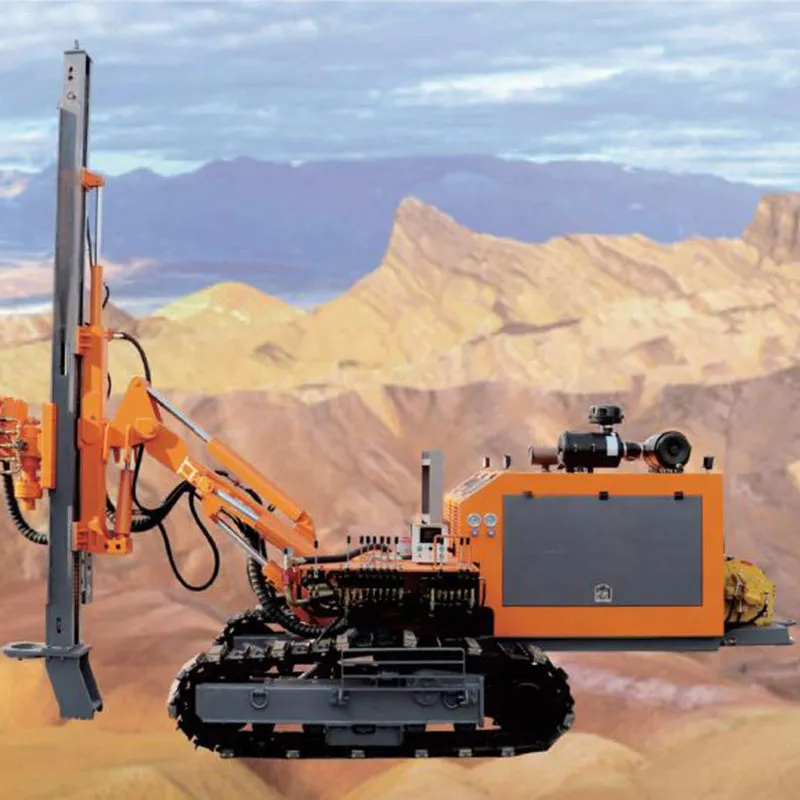
Results: The project achieved its pre-splitting targets with exceptional accuracy, minimizing overbreak and reducing the volume of material to be removed. The ultra-low noise and zero-emission operation ensured compliance with stringent local regulations, preventing costly delays and penalties. The contractor noted a 40% reduction in logistical costs associated with power and fuel supply compared to conventional methods. Customer feedback highlighted the ease of operation and the minimal site footprint.
These cases exemplify our commitment to delivering high-performance, sustainable drilling solutions that not only meet but exceed client expectations, driving both operational excellence and environmental responsibility.
Trust and Support: Our Commitment to Clients
Building long-term partnerships based on trust and mutual success is at the core of our business philosophy. We ensure that every Photovoltaic Type Open-Air Drilling Car is backed by robust certifications, transparent service commitments, and comprehensive support.
Certifications and Authoritative References:
Our manufacturing processes and products adhere to the highest international standards. We are ISO 9001:2015 certified for Quality Management Systems, ensuring consistent product quality. Our equipment also meets CE safety standards for the European market and relevant ANSI/API standards for critical components. All PV panels and battery systems are certified to IEC (International Electrotechnical Commission) standards for performance and safety.
Partner Clients and Years of Service:
With over two decades of experience in heavy machinery manufacturing, we have cultivated partnerships with leading mining corporations, construction conglomerates, and public works agencies worldwide. Our longevity in the industry is a testament to the reliability and performance of our equipment and the dedication of our service teams.
Lead Time and Fulfillment:
Standard lead times for a Photovoltaic Type Open-Air Drilling Car typically range from 12 to 18 weeks, depending on customization requirements and current production schedules. We provide detailed project timelines upon order confirmation, including manufacturing milestones, quality control checks, and estimated delivery dates. Our logistics team ensures efficient and secure global shipping, with comprehensive tracking.
Warranty Commitments:
Each drilling car comes with a standard 12-month / 2,000-hour warranty on major components (engine, hydraulic system, electrical system), whichever comes first. The photovoltaic panels and battery storage systems typically carry extended warranties from their respective manufacturers, often 5 years for inverters and 25 years for PV panel output performance. Extended warranty options are available upon request.
Customer Support and After-Sales Service:
Our dedicated global support network offers 24/7 technical assistance, remote diagnostics, and on-site service by factory-trained technicians. We maintain a comprehensive inventory of spare parts for rapid dispatch, minimizing potential downtime. Training programs for client operators and maintenance staff are also provided to ensure optimal equipment utilization and longevity.
Frequently Asked Questions (FAQ)
Q1: How does the Photovoltaic Type Open-Air Drilling Car operate at night or on cloudy days?
A1: The drilling car is equipped with a high-capacity LiFePO4 battery bank that stores excess solar energy generated during daylight hours. This stored energy powers the drilling operations at night or during periods of low solar irradiance. The system is designed for autonomous operation over typical shift durations, with intelligent energy management to optimize battery usage.
Q2: What is the expected lifespan of the photovoltaic panels and batteries?
A2: The photovoltaic panels typically have a performance warranty of 25 years, guaranteeing a certain percentage of their original power output. The LiFePO4 batteries are rated for 3,000 to 6,000 charge cycles, which translates to an operational lifespan of 8-15 years, depending on usage patterns and environmental conditions. Both components are designed for industrial durability.
Q3: Can the drilling car be charged from an external power source if needed?
A3: Yes, while designed for self-sufficiency, the Photovoltaic Type Open-Air Drilling Car includes an auxiliary charging port that allows for rapid charging from an external grid connection or a portable generator. This provides flexibility for quick turnarounds or in prolonged periods of exceptionally poor sunlight conditions.
Q4: How does the system handle dust and debris in harsh open-air environments?
A4: The PV panels are designed with self-cleaning surfaces or are easily cleaned by operators. Critical electronic and electrical components are housed in IP65-rated enclosures, protecting them from dust and moisture ingress. The drilling car also features an integrated dry-type dust collector with a high-efficiency filtration system to minimize airborne particulates during drilling.
Q5: What kind of operator training is provided?
A5: We offer comprehensive training programs that cover operational procedures, routine maintenance, basic troubleshooting, and safety protocols specific to the Photovoltaic Type Open-Air Drilling Car. Training can be conducted at our facilities or on-site, ensuring your team is fully proficient in maximizing the equipment's potential.
Conclusion
The Photovoltaic Type Open-Air Drilling Car stands at the vanguard of sustainable heavy machinery, offering an unparalleled blend of environmental responsibility, operational efficiency, and economic advantage. By integrating robust photovoltaic technology with high-performance drilling capabilities, it provides a powerful solution for industries navigating the complex demands of modern resource extraction and infrastructure development.
Its ability to operate autonomously, with reduced fuel costs, minimal emissions, and lower noise pollution, positions it as a strategic asset for companies committed to innovation, sustainability, and long-term profitability. As global industries continue to prioritize green technologies and operational independence, the photovoltaic drilling car is not merely an alternative but a definitive step forward in the evolution of open-air drilling.
References
- International Renewable Energy Agency (IRENA). "Renewable Power Generation Costs in 2023." irena.org.
- ISO (International Organization for Standardization). "ISO 9001:2015 Quality management systems." iso.org.
- European Commission. "CE marking – Conformity Assessment." europa.eu.
- Journal of Cleaner Production. "Life Cycle Assessment of Photovoltaic Systems." sciencedirect.com.
- Mining Technology. "The future of mining: Electric and autonomous fleets." mining-technology.com.
-
Find the Best Industrial Martillo a la Venta for Professional Needs
NewsApr.16,2026
-
Technical Guide for Herramientas de Perforación Subterránea PDF
NewsApr.09,2026
-
Comprehensive Guide to Underground Drilling Tools Herramientas de Perforación Subterráneas
NewsApr.07,2026
-
Comprehensive Guide to Underground Drilling Tools herramientas de perforación subterránea
NewsApr.04,2026
-
Finding Reliable Proveedores de Compresores de Aire Diesel for Your Industry Needs
NewsMar.31,2026
-
Comprehensive Guide to Diesel Air Compressors and Miningzy Fábrica de Compresores de Aire Diesel
NewsMar.28,2026