
Oct . 10, 2025 13:20 Back to list
Crawler Surface Down-The-Hole Drilling Rig: Faster Drilling?
On the ground with a modern DTH rig: what actually matters
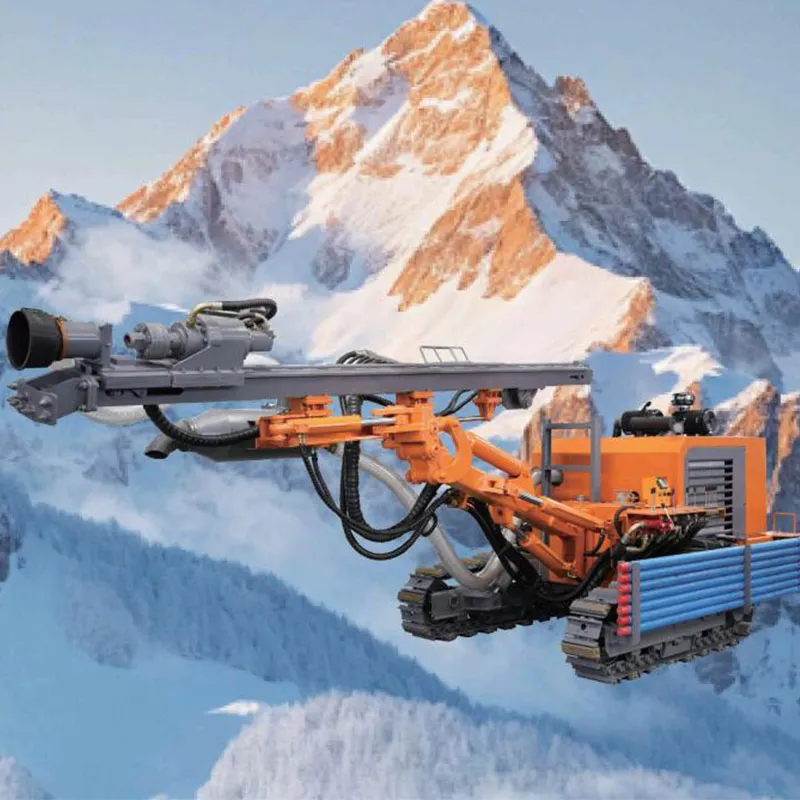
The Crawler Surface Down-The-Hole Drilling Rig is the sort of machine you judge by the hole it leaves behind—and the time it takes to do it. In quarries and open pits, crews want reliable penetration, low air losses, and a clean bench. Sounds simple, but it’s not. I’ve walked more than a few dusty sites where, to be honest, the difference between a good shift and a bad one came down to compressor sizing and a stubborn feed chain.
Where it works and why operators are switching
This rig targets mining, quarrying, rail and road cuts, water conservancy projects, building materials, and yes, even military open-pit jobs. It also shines in bolt support, channel excavation, and sewer drilling—places where alignment and air management make or break the schedule. Many customers say DTH on harder formations (120–220 MPa) still beats top-hammer for straightness and hole quality, especially beyond 15 m.
Industry trends (seen on site, not just spec sheets)
- Cleaner benches: integrated dust collectors and optional wet suppression to meet silica limits.
- Right-sized compressors: matching hammer/bore for fewer stalls and better chip evacuation.
- Telematics-lite: hour meters, fuel logs, and alarm histories—useful, not overbearing.
- Noise controls: baffled exhausts to keep the operator sane on a long shift.
Key specs (typical configuration)
| Hole diameter | 90–152 mm (≈3.5–6 in) |
| Depth capacity | Up to ≈30–40 m per pass, deeper with rods |
| Hammer class | 4"–6" DTH (high-pressure) |
| Air requirement | 15–24 m³/min @ 10–18 bar (real-world may vary) |
| Engine power | ≈160–220 kW, Tier 3/Stage III or equivalent |
| Rotation torque | ≈3.5–5.5 kN·m |
| Feed force | ≈18–25 kN (adjustable) |
| Tramming speed / gradeability | 0–3.0 km/h / up to 25° |
| Dust control | Dry cartridge or wet mist; ≤2.5 mg/m³ target on bench (site-dependent) |
| Operating weight | ≈12–16 t |
Build process and quality controls
Materials: high-strength low-alloy steel mast, heat-treated wear parts, nitrile and Viton seals where heat is expected. Methods: robotic welding on stress points, precision-machined rotation head, hydrostatic test of air lines. Testing: NDT (UT/MT) on mast welds, load tests per EN 16228 principles, functional safety checks against ISO 19296. Service life: many fleets report 8,000–12,000 engine hours before major rebuilds, assuming routine maintenance and proper filtration.
Field data (internal yard tests; granite 140–180 MPa)
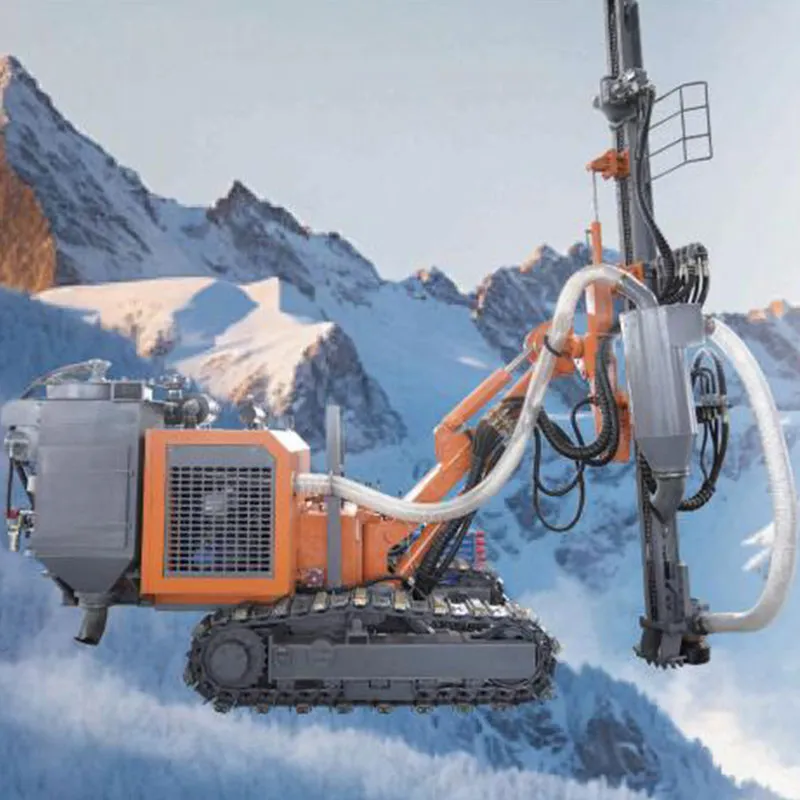
- Penetration: ≈0.9–1.6 m/min at 115–130 mm bits.
- Fuel burn: ≈12–18 L/h depending on air load and rod handling.
- Noise: ≈96–100 dB(A) at operator station with canopy, measured per ISO 11201 methods.
- Dust: with wet suppression, readings typically align with OSHA 29 CFR 1926.1153 exposure limits in open air (always verify on site).
Customization and options
Options include auto-rod handling, GPS hole navigation, high-altitude compressor tuning, cold-start kits, water-mist dust control, and bolt-hole jigs for tunnel faces. Origin and support come from Tower C 603, MCC World Grand Plaza, No.66, XiangTai Road, Shijiazhuang, Hebei, China—which, surprisingly, ships faster than some expect.
Vendor snapshot (quick, imperfect, but useful)
| Vendor | Strengths | Watch-outs |
| ZY Mining (factory) | Competitive pricing, parts kits, flexible compressor matching | Lead times can stretch during peak quarry season |
| Global Brand X | Strong global dealer network, rich telematics | Higher TCO; software subscriptions |
| Regional Brand Y | Fast delivery, simple electrics | Limited hammer compatibility and fewer safety options |
Case note
A basalt quarry in North China swapped an older top-hammer for a Crawler Surface Down-The-Hole Drilling Rig. After two weeks of dialing in air pressure and bit selection, they reported straighter 127 mm holes and about 14% faster charging because collars were cleaner. Not a miracle—just better consistency.
Compliance, certifications, and paperwork
- ISO 9001 factory quality system; CE documentation available on request.
- Safety design referenced to ISO 19296 and EN 16228 family; local regulations still apply.
- Silica exposure controls aligned with OSHA 29 CFR 1926.1153 practices; verify with your IH.
Sources (authoritative, in the boring-but-important sense): [1] ISO 19296:2018; [2] EN 16228:2014 (series); [3] SME Mining Engineering Handbook, 3rd Ed.; [4] OSHA 29 CFR 1926.1153.
- ISO 19296:2018 Mining — Mobile machines — Safety requirements.
- EN 16228:2014 Drilling and foundation equipment — Safety (Parts 1–7).
- SME Mining Engineering Handbook, 3rd Edition, Society for Mining, Metallurgy & Exploration.
- OSHA Respirable Crystalline Silica Standard, 29 CFR 1926.1153.
-
Find the Best Industrial Martillo a la Venta for Professional Needs
NewsApr.16,2026
-
Technical Guide for Herramientas de Perforación Subterránea PDF
NewsApr.09,2026
-
Comprehensive Guide to Underground Drilling Tools Herramientas de Perforación Subterráneas
NewsApr.07,2026
-
Comprehensive Guide to Underground Drilling Tools herramientas de perforación subterránea
NewsApr.04,2026
-
Finding Reliable Proveedores de Compresores de Aire Diesel for Your Industry Needs
NewsMar.31,2026
-
Comprehensive Guide to Diesel Air Compressors and Miningzy Fábrica de Compresores de Aire Diesel
NewsMar.28,2026